The White Wonder: A Visitor's Guide to Experiencing the Spiritual Energy of Ruwanwelisaya Stupa

Sophia Clarke
Travel Writer
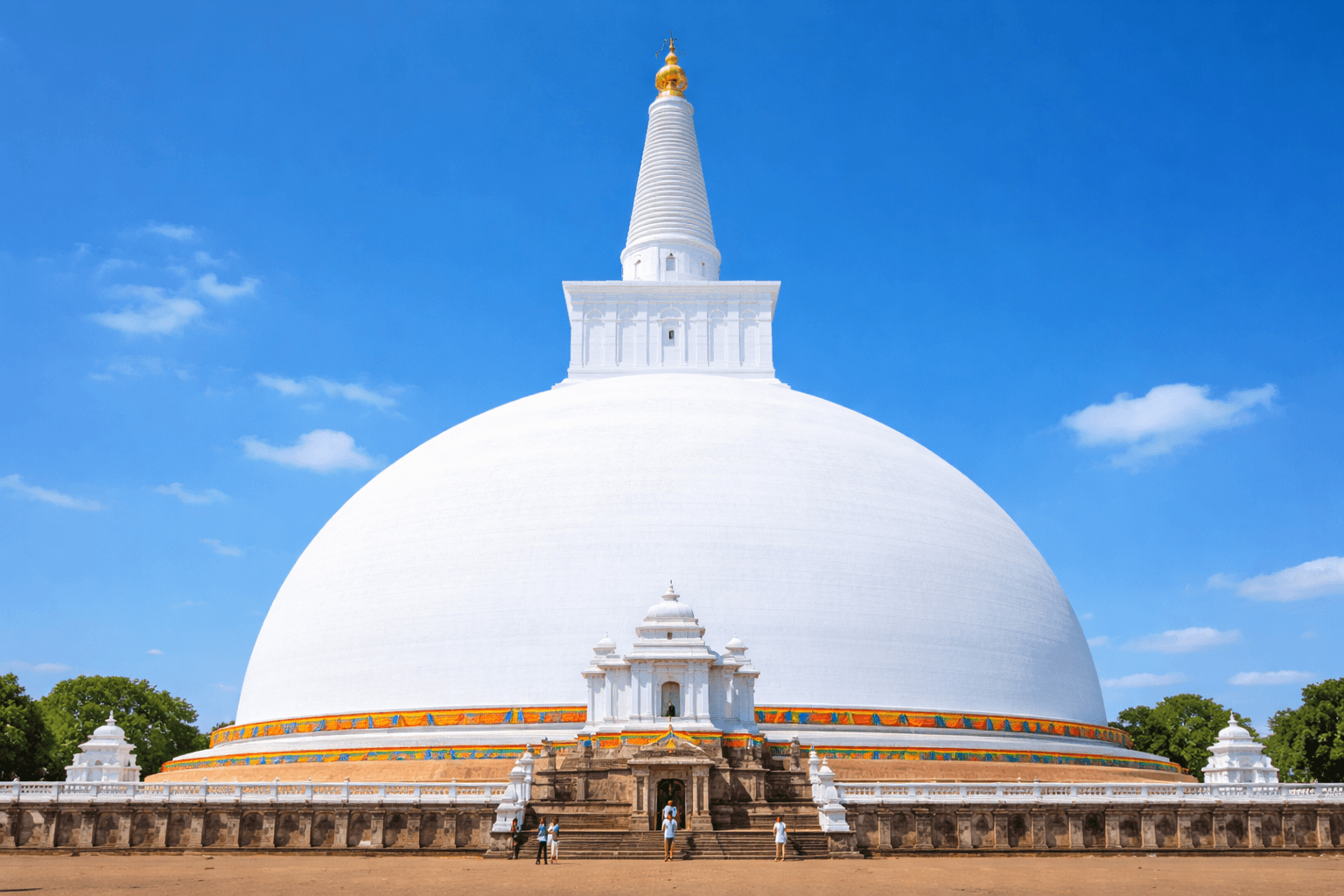
While the Jaya Sri Maha Bodhi offers an intimate link to history, the Ruwanwelisaya Stupa offers a breathtaking spectacle of faith and architectural brilliance. Often simply called the "Maha Stupa" or the "Great Stupa," its colossal, gleaming white dome dominates the skyline of the Sacred City.
A visit here is not merely sightseeing; it is an immersion into the deepest spiritual traditions of Sri Lanka. Here is your guide to understanding and experiencing the sheer energy of this iconic landmark.
A Monument of Grandeur and Faith
The history of the Ruwanwelisaya is tied to one of Sri Lanka’s most revered monarchs, King Dutugemunu (161–137 BCE). The King, celebrated for uniting the country, considered the construction of this stupa his greatest achievement. Tragically, he passed away before its completion. It is said that his brother, Saddha Tissa, finished the work by displaying a false, finished plaster casing to allow the dying king a final look at his masterpiece.
It was one of the largest structures of the ancient world, only surpassed in height by the two larger stupas in Anuradhapura, the Jetavanaramaya and the Abhayagiriya. Over the centuries, it fell into ruin but was lovingly restored in the early 20th century to the pristine condition we see today, covered in its signature brilliant white lime plaster.
The Stupa's Design and Symbolism
The design of the Ruwanwelisaya is based on the Dhanyakara or "Paddy Heap" shape, but it is often described as the perfect "water bubble" shape, symbolizing the impermanence of existence.
Its base is famously encircled by a massive wall of carved elephants. There are hundreds of these magnificent sculptures, appearing to shoulder the weight of the colossal structure. This Etha Pawura (Elephant Wall) adds a truly unique layer of artistry and power to the site.
At the very top of the stupa is the Koth Kerella or the spire, usually topped with a precious gem or crystal. This entire structure contains relics of the Buddha, making the act of walking around it a profound act of worship.
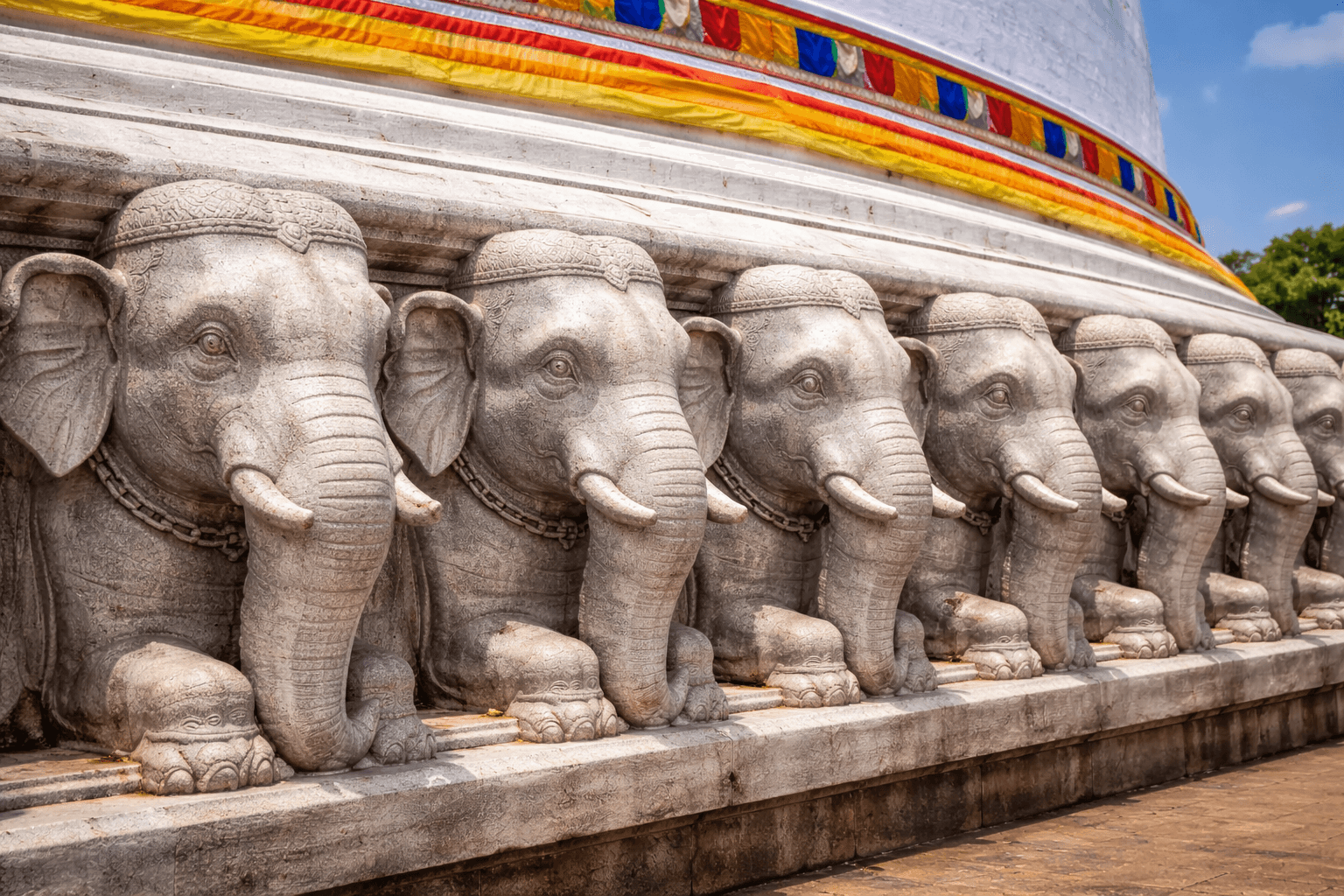
Experiencing the Spiritual Energy
The energy at the Ruwanwelisaya is palpable, especially during key moments of the day.
Morning Puja: Arriving at sunrise (around 6:00 AM) or midmorning (around 9:00 AM) offers the chance to witness the traditional offering of the Buddha Puja. Devotees arrive in white, carrying flowers, and the chants of monks fill the air. The blinding white of the stupa is particularly photogenic in the soft morning light.
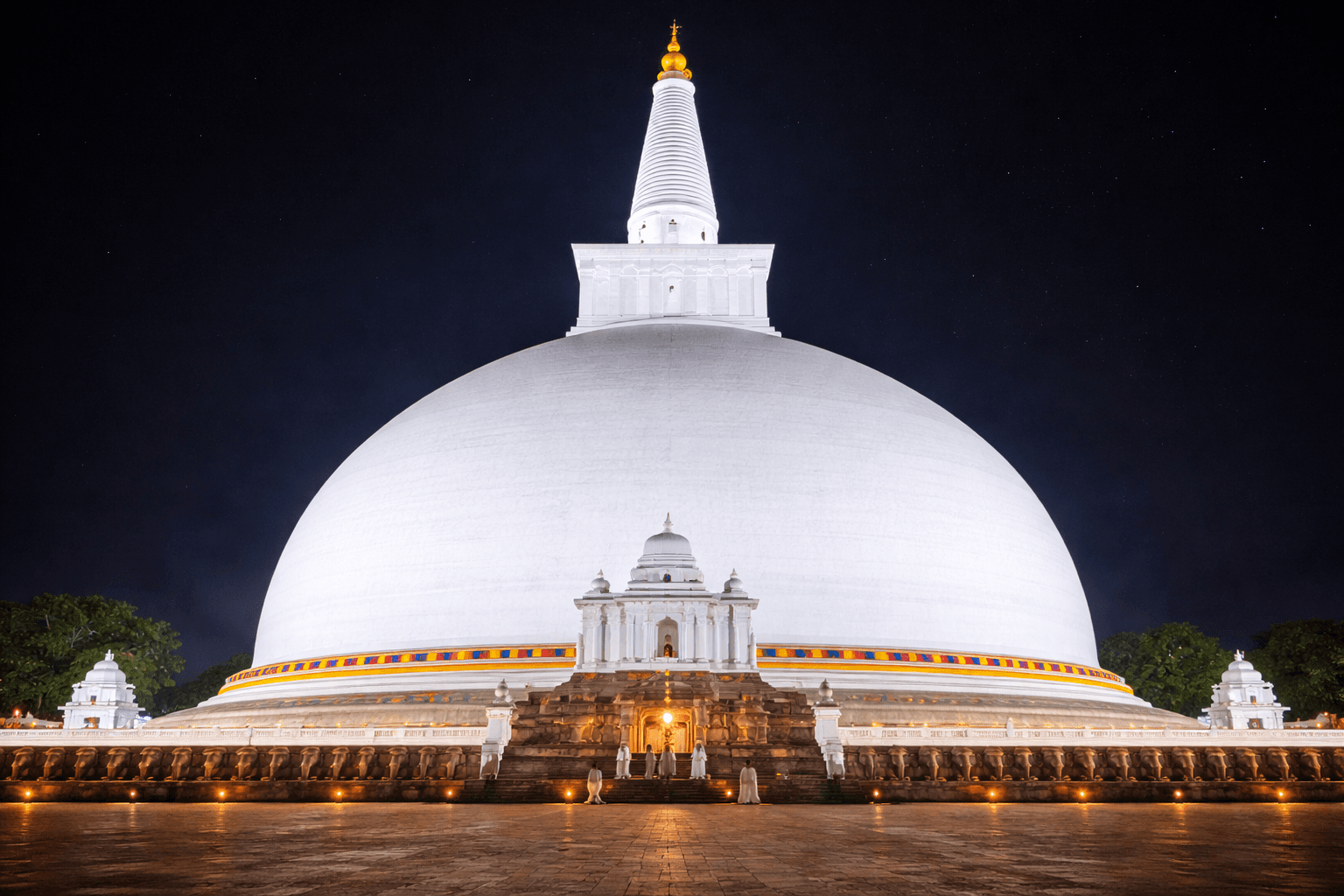
Evening Illumination: While beautiful during the day, the stupa takes on a truly magical quality after sunset. It is illuminated by powerful floodlights, transforming it into a glowing beacon of faith visible from miles away. The atmosphere is calm, cool, and perfect for reflective moments.
Visitor’s Guide and Essential Tips
To make the most of your visit while showing proper respect, keep these tips in mind:
When to Visit: Avoid the midday heat (11:00 AM to 3:00 PM), as the vast paved area around the stupa can become scorching hot after removing your footwear.
Etiquette Reminder: As with all sacred sites in Anuradhapura:
Dress Modestly: Shoulders and knees must be covered. White is encouraged.
Remove Footwear: Shoes and socks must be removed before entering the sacred boundary.
Walk Clockwise: Always proceed in a clockwise direction around the stupa during your devotional walk (Pradakshina).
Maintain Silence: Speak softly and be mindful of those praying.
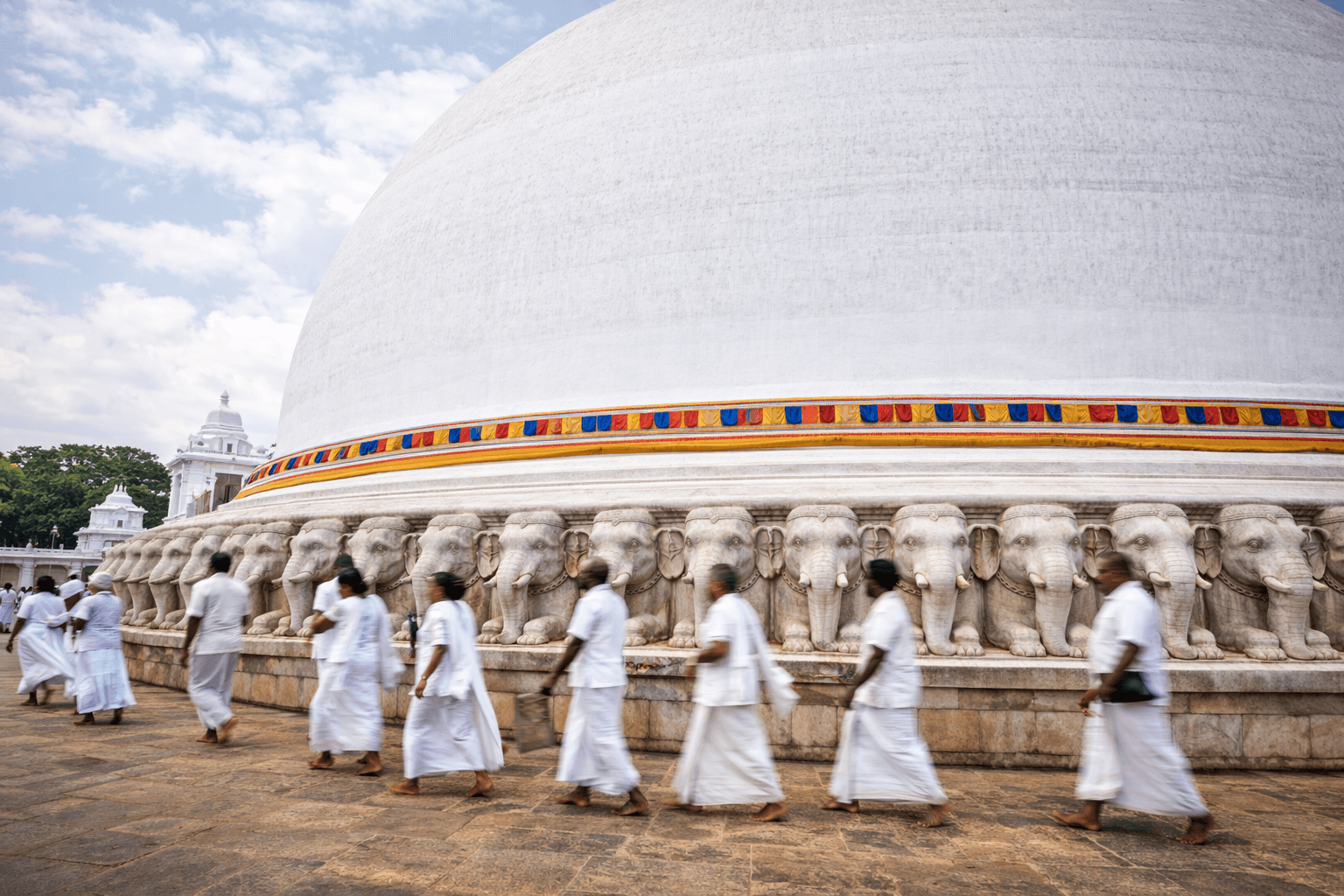
A Pilgrimage for Every Traveler
The Ruwanwelisaya Stupa is a powerful reminder that history is not static; it is a living, breathing tradition maintained by millions of acts of faith every day. Whether you come for the history, the architecture, or the spiritual energy, this White Wonder promises an experience you will not soon forget.
Enjoyed this story? Share it
About the Author
Sophia Clarke
A passionate heritage explorer and travel storyteller dedicated to uncovering the sacred history, ancient temples, and timeless culture of Anuradhapura — Sri Lanka's spiritual heartland.