The Engineering Marvel: Exploring the Ancient Water System of Kuttam Pokuna

Sewmi Ranasinghe
Travel Writer
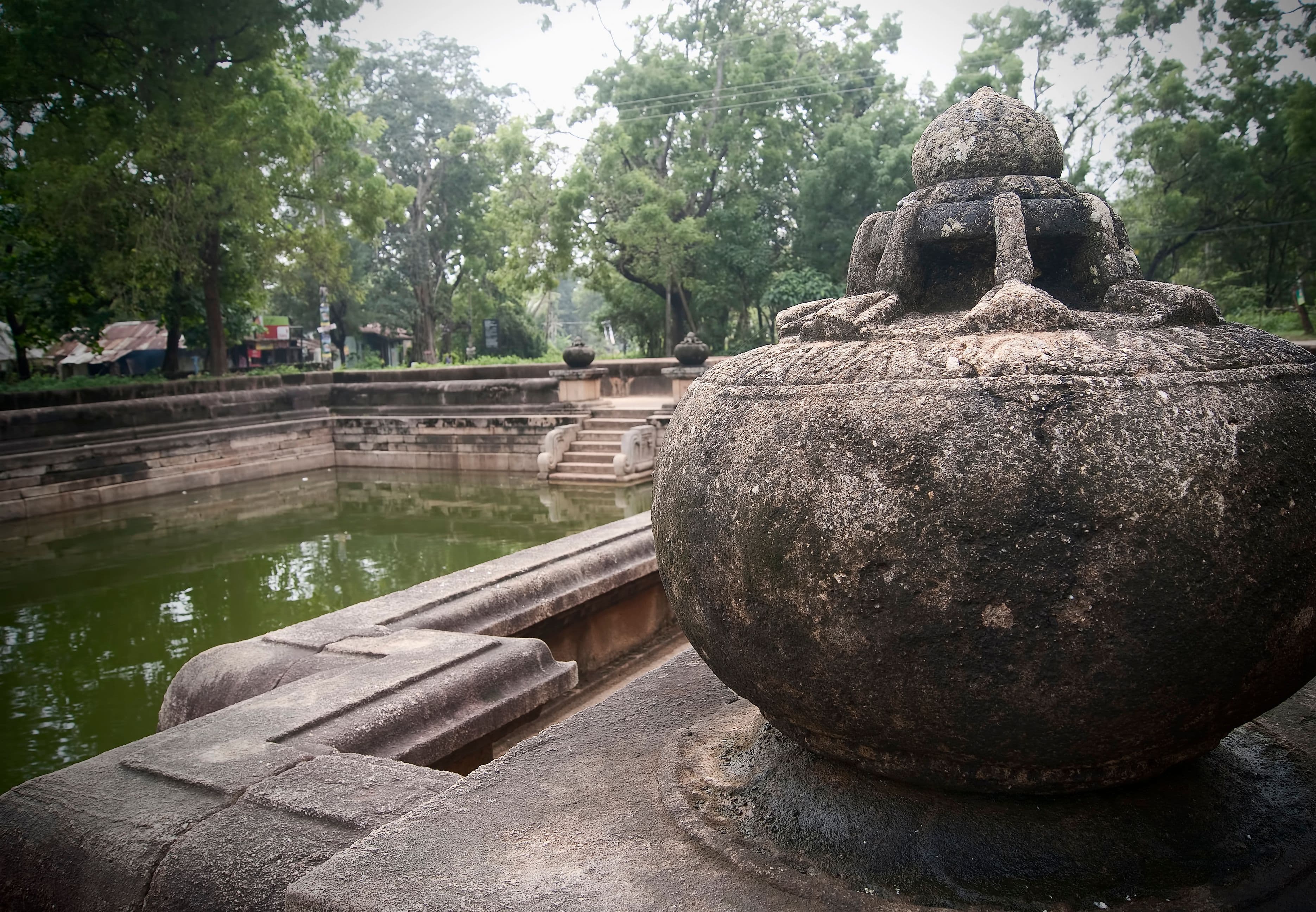
Anuradhapura is famous for its massive stupas and sacred trees, but perhaps the most elegant testament to the ingenuity of its ancient civilization is found in its water management. The Kuttam Pokuna, or Twin Ponds, are a remarkable example of hydraulic engineering and sophisticated stonework, demonstrating that the ancient Sinhalese mastered not only immense architecture but also the vital necessity of water purification and conservation.
Located within the sprawling Abhayagiri monastic complex, these ponds served as the bathing pools for the thousands of monks who once lived here. They are far more than simple baths; they are a masterpiece of functional artistry.
Hydraulic Brilliance in the Dry Zone
In Sri Lanka’s dry zone, water was the ultimate symbol of prosperity and the lifeline of civilization. While the huge manmade reservoirs like the Tissa Wewa were essential for agriculture, the Twin Ponds showcase the level of detail applied to smaller, functional systems.
Believed to have been constructed around the 6th to 8th centuries CE, the ponds are a vital component of the Abhayagiri Vihara, indicating the importance of ritual cleansing and bathing for the monastic community. Their existence confirms that ancient engineers placed equal value on both practical function and aesthetic design.
The Secret of the Twin Design
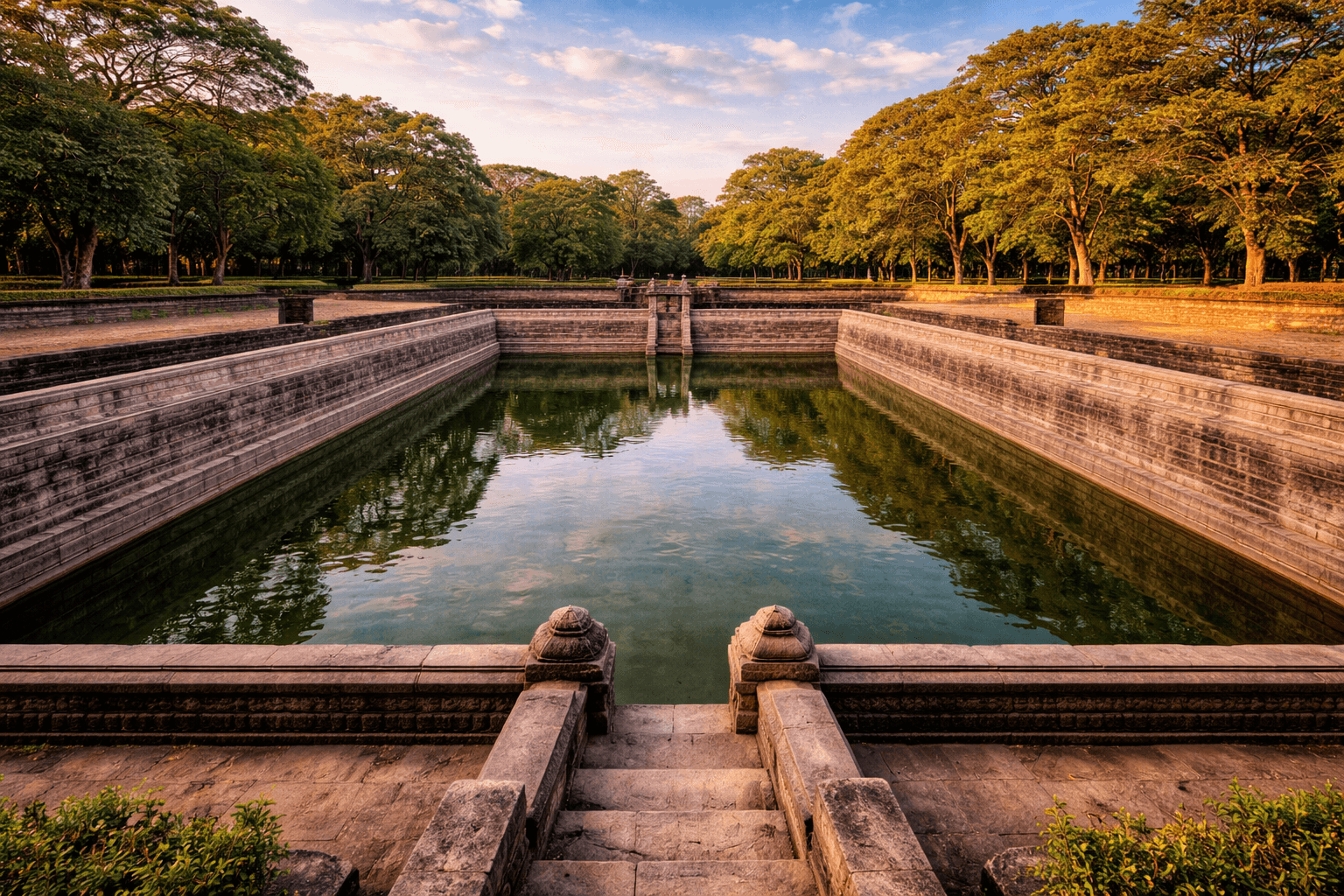
The two ponds are clearly distinct. The larger, southern pond measures about 132 feet in length, while the smaller, northern pond is approximately 91 feet long. Both share the same width. They are separated by a narrow space and are connected by a carefully designed underground stone channel near the bottom.
This dual design was not merely decorative. The smaller, shallower northern pond was built first and served as the initial point of entry and filtration for the water supply, ensuring the larger, deeper southern pond received cleaner water.
Filtration: The Ancient Technology
The brilliance of Kuttam Pokuna lies in its advanced filtration system. Water was sourced from a massive reservoir, likely an external tank, and traveled through underground clay pipes into the monastic complex.
Before the water ever reached the bathing ponds, it passed through several filtration chambers, acting as sediment traps. This complex mechanism ensured that the water entering the ponds was clean and pure, a level of sophistication rarely seen in the ancient world. The water entered the smaller pond, flowed through the subterranean pipe to the larger pond, and finally drained through an outlet at the base of the smaller pond, likely to irrigate nearby fields. The entire system minimized waste and maximized purity.
Architectural Beauty and Symbolism
The ponds are fully lined with finely cut granite slabs, forming a stepped slope toward the center. This practical design allowed monks to sit comfortably on the lower terraces while bathing.
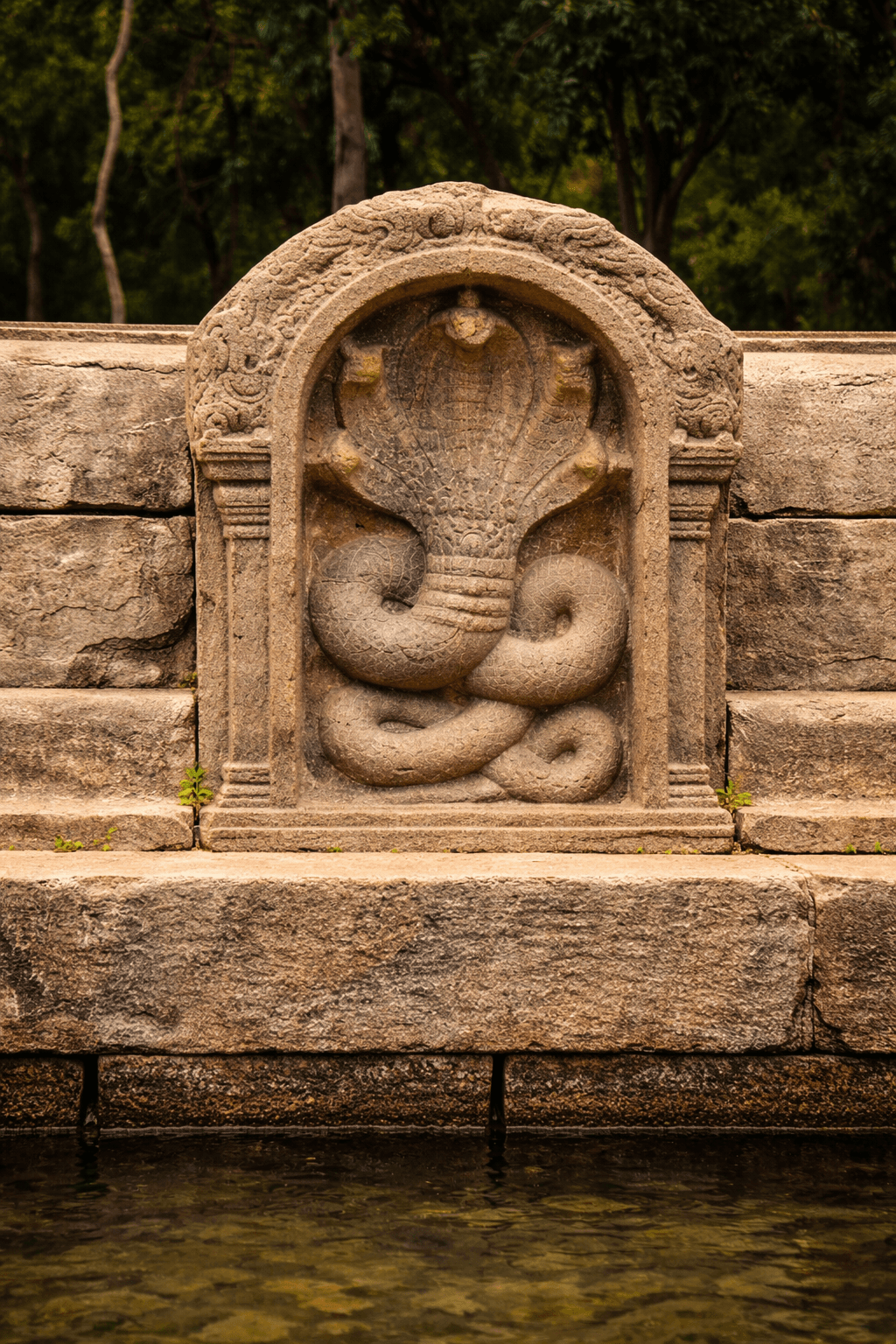
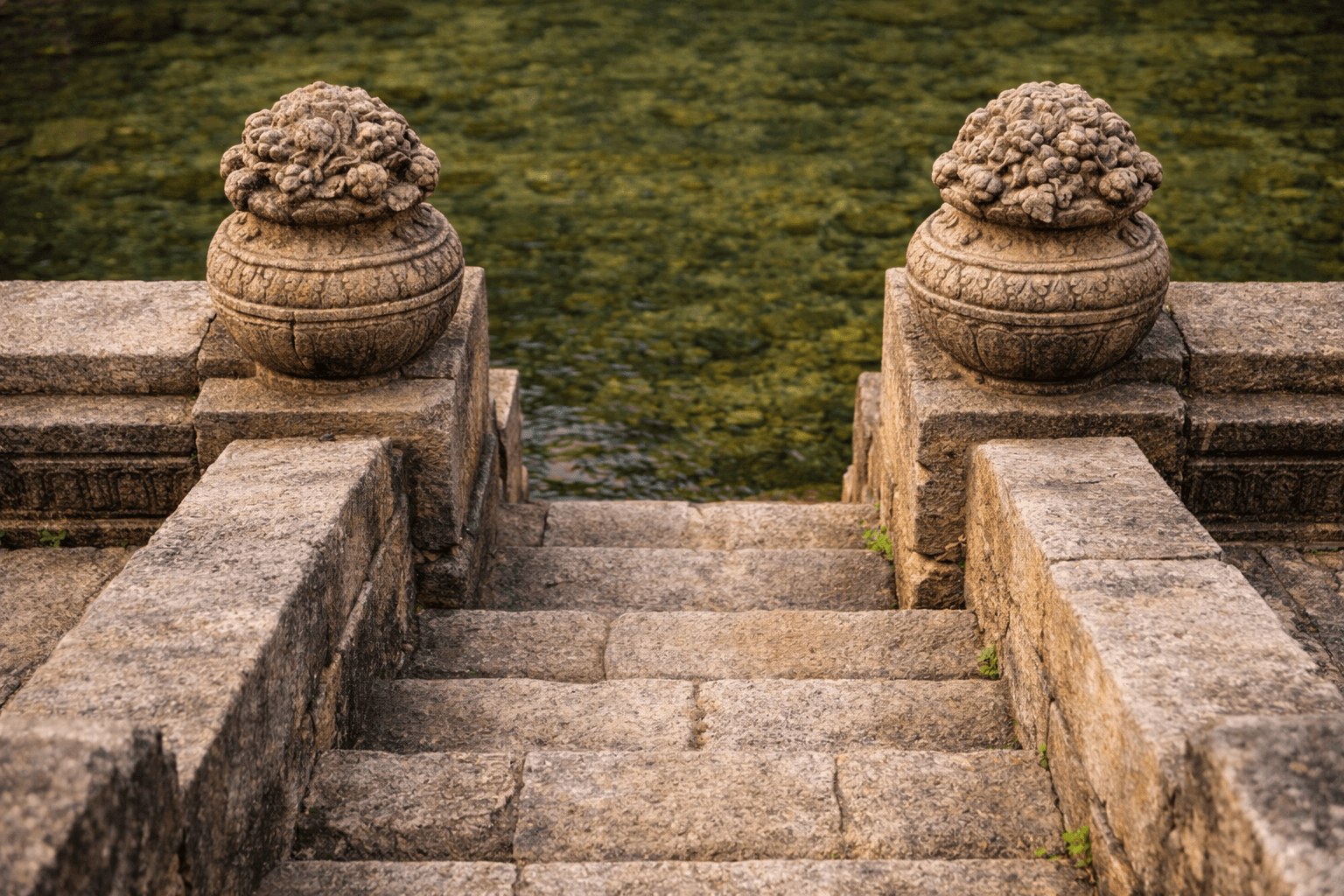
The staircases at the ends of the ponds are the main artistic features. They are flanked by elegantly carved balustrades and feature the auspicious symbol of the Punkalasa, or "Pot of Abundance," which represents prosperity and spiritual fulfillment. Additionally, look for the beautiful carving of a five hooded cobra (Naga) near the northern pond, a symbolic guardian of water and fertility.
Tips for Visiting This Peaceful Gem
Kuttam Pokuna is located in the northern section of the Sacred City, easily accessible from the Abhayagiri Stupa and the Samadhi Buddha Statue.
- Best Time to Visit: Morning is best, as the light hits the steps beautifully, and the tranquility allows you to appreciate the stillness of the water and the sheer scale of the engineering without the distraction of crowds.
- Focus on the Details: Do not just look at the pools; examine the steps, the carvings, and the distinct designs of the Punkalas at the two ponds.
A Timeless Masterpiece
Kuttam Pokuna is a vital stop for any visitor to Anuradhapura, offering tangible proof of the advanced civilization that thrived here. It reminds us that ancient architecture was not just about building big, but about living smartly, beautifully, and sustainably.
Enjoyed this story? Share it
About the Author
Sewmi Ranasinghe
A passionate heritage explorer and travel storyteller dedicated to uncovering the sacred history, ancient temples, and timeless culture of Anuradhapura — Sri Lanka's spiritual heartland.