Secrets of the Guard Stones: Where to Find the Best Sandakada Pahana Carvings in Anuradhapura

Nethumi Perera
Travel Writer
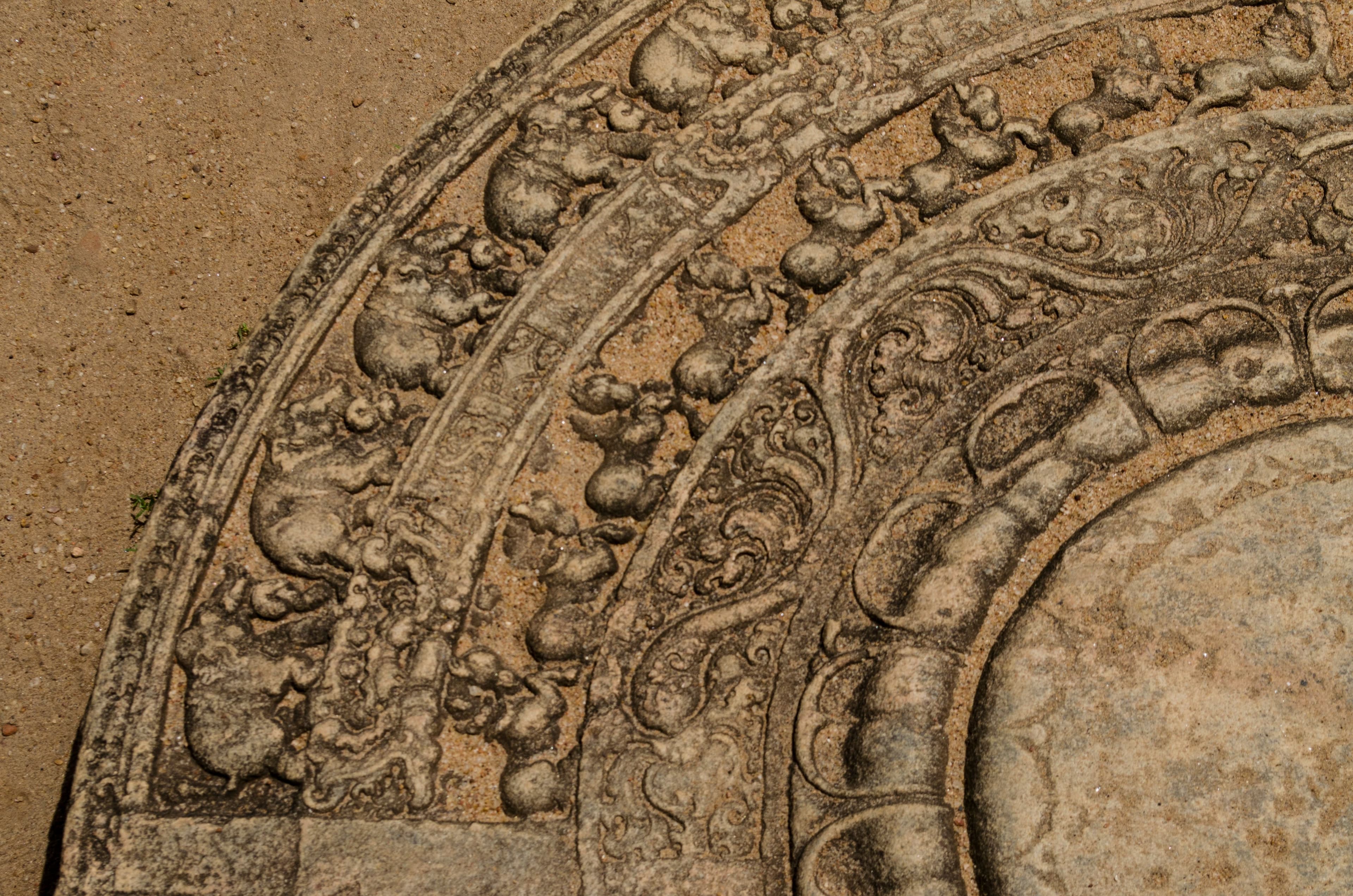
In the colossal landscape of Anuradhapura, it is easy to focus only on the massive dagobas and sprawling ruins. Yet, the true artistry and spiritual depth of the ancient city often lie underfoot, in the seemingly unassuming stone slabs at the foot of every major staircase: the Sandakada Pahana, or Moonstone, and its flanking sentinels, the Guard Stones.
These carvings are not mere decoration; they are symbolic roadmaps of the path to enlightenment and the silent guardians of sacred space. Learning to read these stones transforms your tour from a simple walk through ruins into a profound archaeological journey.
The Sandakada Pahana: A Symbolic Journey
The Moonstone is a unique feature of ancient Sinhalese architecture, typically found at the entrance to monastic buildings or shrines. Its function is to spiritually cleanse and prepare the worshipper before they ascend the sacred stairs.
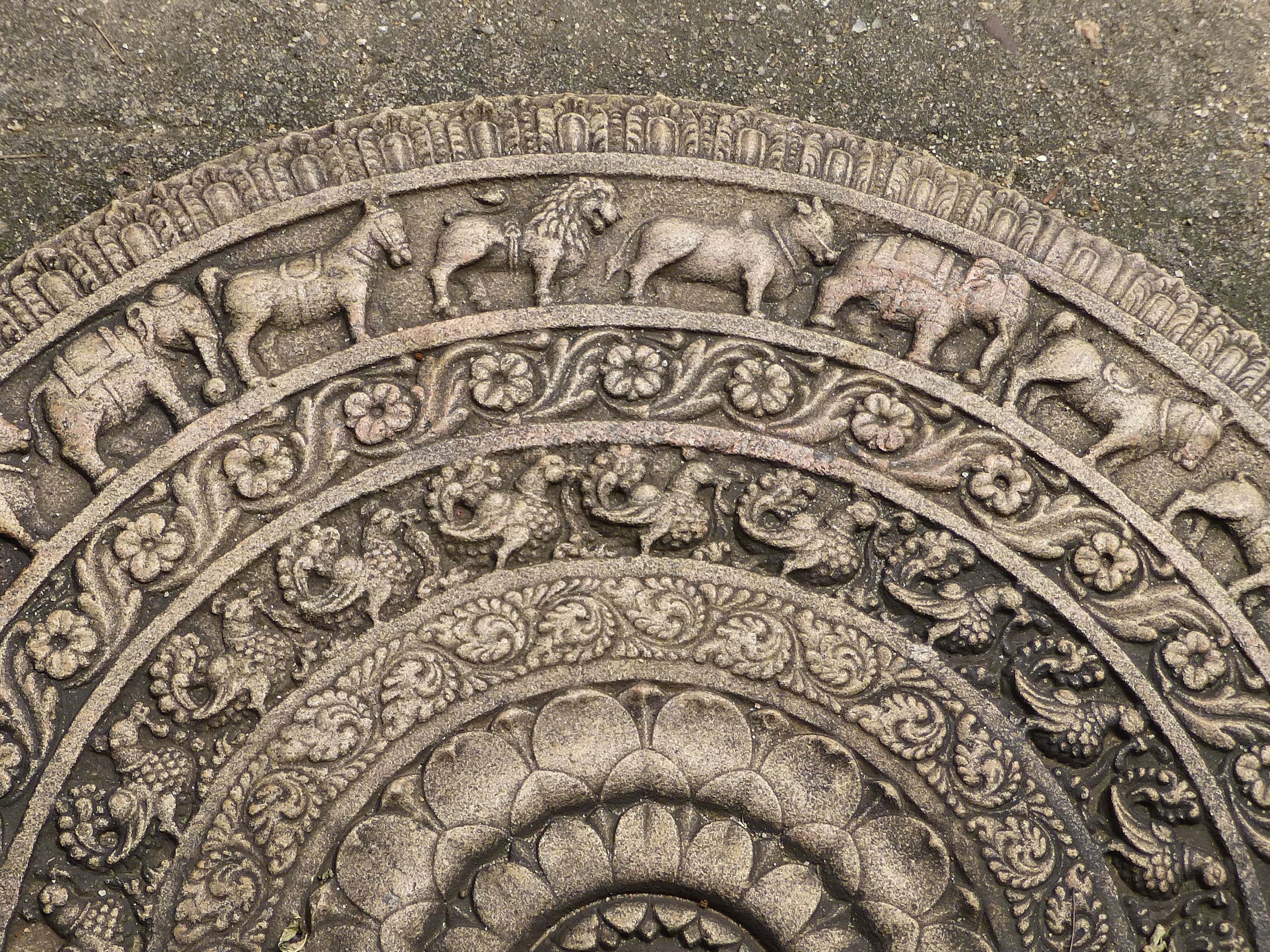
The semi circular stone is divided into several concentric bands, each holding profound Buddhist meaning:
The Outer Ring (The Flame): Often represented by a band of flames, symbolizing the material world and its endless suffering.
The Four Animals (The Cycle of Life): The next ring typically features a procession of the four animals (elephant, horse, lion, and bull) chasing one another, symbolizing the cycle of birth, decay, and death (Samsara) that the worshipper must transcend.
The Swans (Purity): A band of swans (hamsa) follows, symbolizing the wisdom and purity needed to separate the truth from falsehood.
The Floral Scroll (Desire): Next is a lavish floral scroll, representing the seductive power of human desires and worldly temptations.
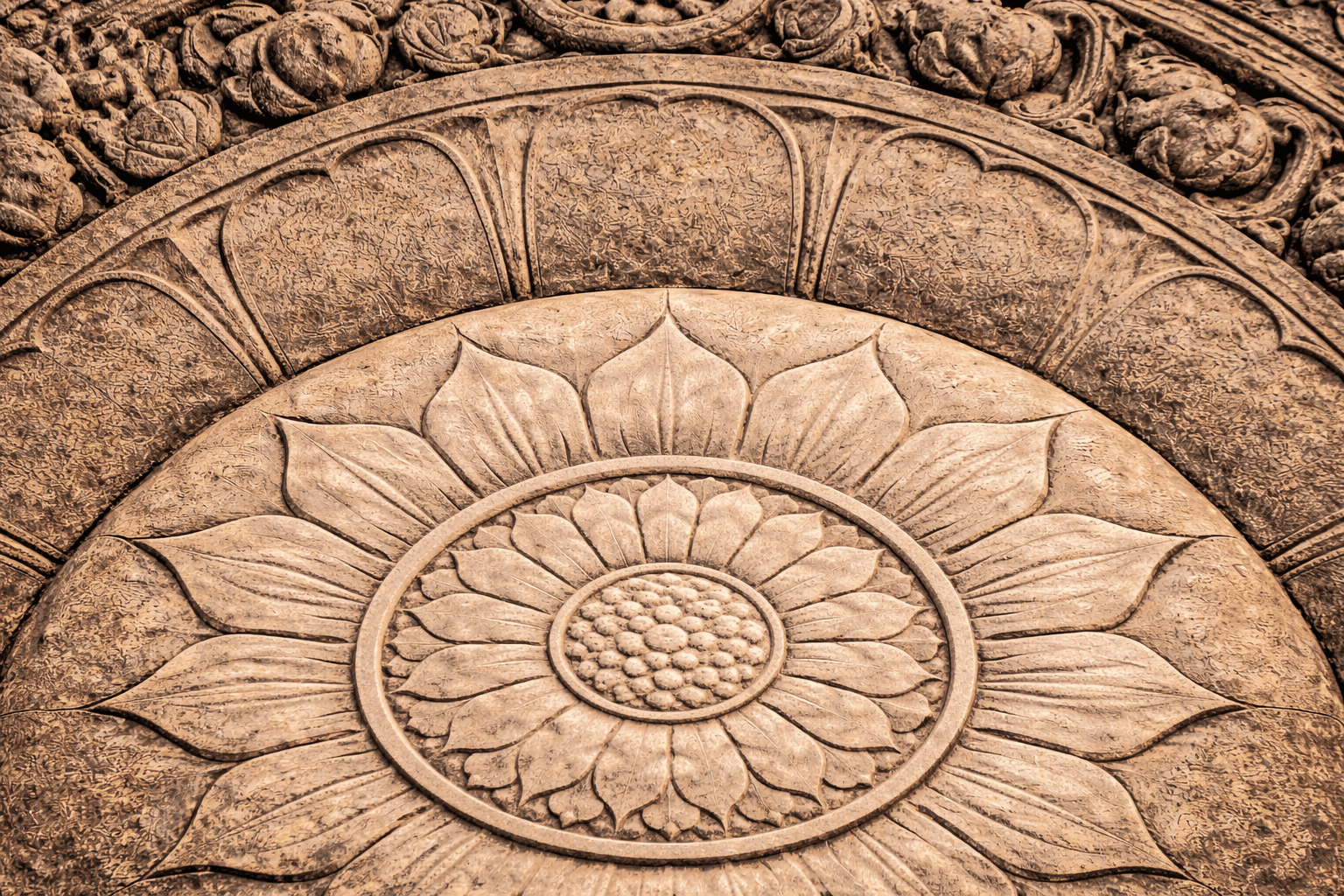
The Center (Nirvana): At the center, a simple, unadorned lotus flower rests, representing the ultimate goal of purity and Nirvana, achieved only after passing through the trials of the outer rings.
The Guard Stones: Silent Protectors
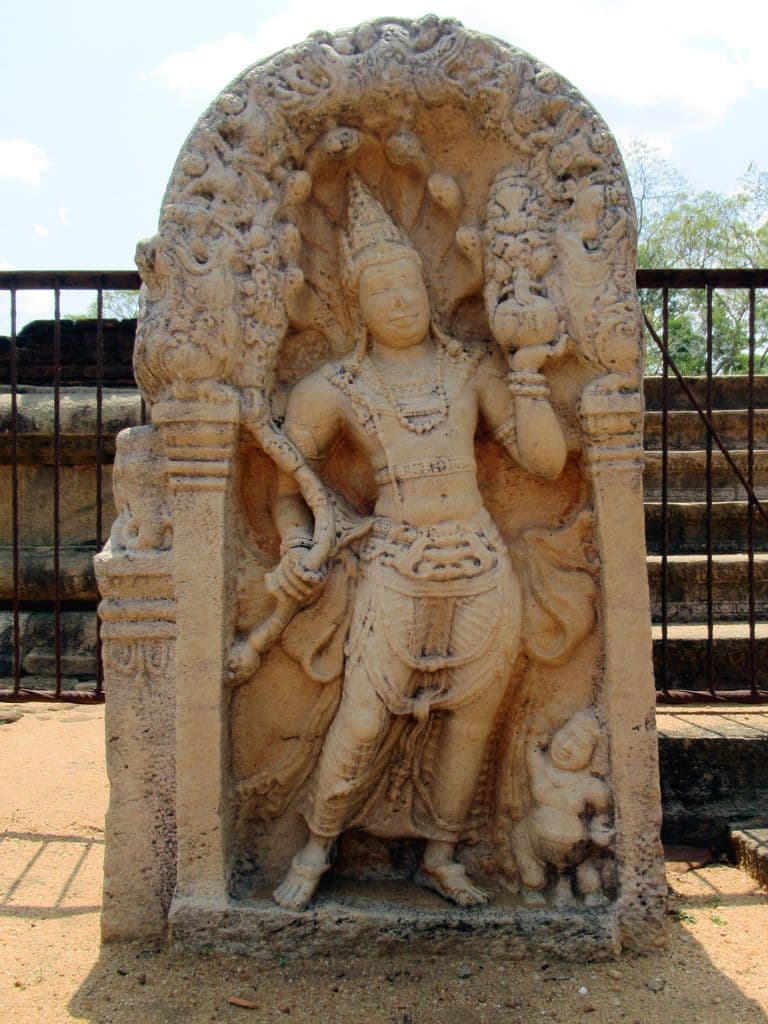
Flanking the stairs on either side of the Moonstone are the Guard Stones. These upright stone slabs served as protective figures for the shrine. They typically depict Dwarapalakas (door guardians) or figures representing prosperity and purity.
The Naga Raja: The most striking and common form is the seven or five hooded cobra (Naga Raja), symbolizing the protection of the waters that feed the monastery. The Naga is often shown holding a Punkalasa (Pot of Abundance) in one hand, further cementing its role as a guardian of wealth and fertility. These carvings are executed with stunning detail and often showcase the height of 8th century sculptural art.
Where to Find the Masterpieces
While Moonstones are ubiquitous throughout the ancient city, their quality varies dramatically based on the period and the status of the temple. To see the best, focus on these locations:
Abhayagiriya Complex: This complex hosts the most famous and artistically perfect Moonstone. Its carving is the clearest, and it features the procession of all four animals, often considered the canonical example. It is found at the base of the staircase leading to the main shrine.
Royal Palace (Vijayabahu's Palace): Look for the guard stones here. The Naga Raja carvings are exceptionally well preserved and particularly elegant, often considered the finest examples of the Dwarapalaka in Anuradhapura.
The Old City Shrines: Several of the smaller, earlier monasteries near the Thuparamaya and Ruwanwelisaya feature simpler, earlier Moonstones. Comparing them shows the incredible evolution of the art form over centuries.
Tips for Appreciation
- Look Down: Consciously change your focus from the vertical height of the stupas to the horizontal masterpieces at your feet.
- Best Light: Visit early in the morning or late in the afternoon when the low angle of the sun emphasizes the carvings, making the details stand out from the stone.
- Respect: Remember the stones are part of a sacred entrance. Avoid stepping directly on them when climbing the stairs, and never sit on the Moonstones for photographs.
Art in Every Footstep
The Moonstone and Guard Stones are miniature museums, offering condensed lessons in Buddhist philosophy, mythology, and art history. Taking the time to observe these details enriches your appreciation for the Anuradhapura civilization, proving that in this ancient kingdom, even the floor beneath your feet tells a profound story.
Enjoyed this story? Share it
About the Author
Nethumi Perera
A passionate heritage explorer and travel storyteller dedicated to uncovering the sacred history, ancient temples, and timeless culture of Anuradhapura — Sri Lanka's spiritual heartland.